
Review · OSLO
Oslofjord Sightseeing
Catch Oslo from the water. This two-hour cruise gives you a fresh view of the city, with Akershus Fortress, the Opera House, and Munch Museum appearing from the fjord. I especially like the smooth electric boat and the chance to step off near Bygdøy, where the Fram Museum and maritime museums are close by.
I also like the roomy outside decks, heated indoor seating, panoramic windows, blankets, and onboard restrooms. The main drawback is simple: the boat leaves from City Hall pier 4, and finding the exact departure point can take extra care. The cruise is also more of a coastal city tour than a dramatic deep-fjord voyage.
Key points to know before sailing
- Two hours from City Hall pier 4: The cruise begins at Rådhusbrygge, or City Hall pier, number 4 in central Oslo.
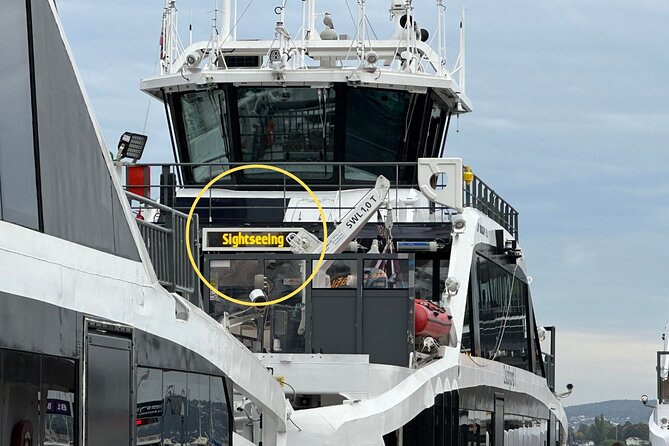
- An electric sightseeing boat: The quiet, smooth ride works well for photography, conversation, and passengers prone to motion sickness.
- A useful Bygdøy stop: You can get off near the Fram and maritime museums instead of returning directly to the city center.
- Indoor comfort and outdoor views: Heated seating, panoramic windows, blankets, and open decks let you adapt to Oslo’s weather.
- Audio commentary in English: Commentary covers Oslo’s landmarks, geography, history, and the countryside around the fjord.
- Food is extra: Snacks and hot or cold drinks are available to buy, but they are not included in the fare.
What the Oslofjord cruise really shows you
Oslo is shaped by its water. The city rises from the head of the Oslofjord, with wooded hills behind it and islands scattered across the bay. A boat trip helps you understand that setting quickly, especially if you have only a short stay.
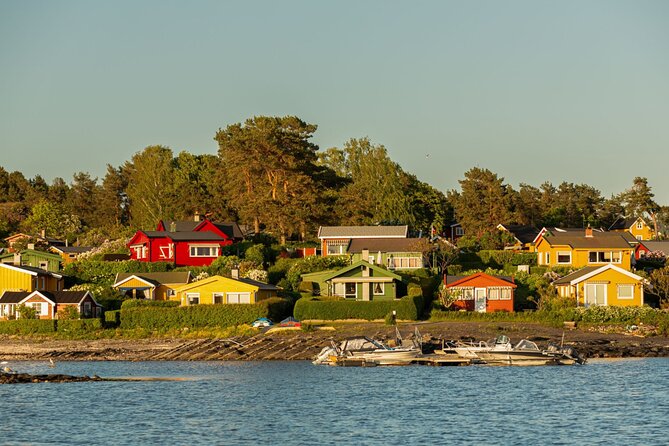
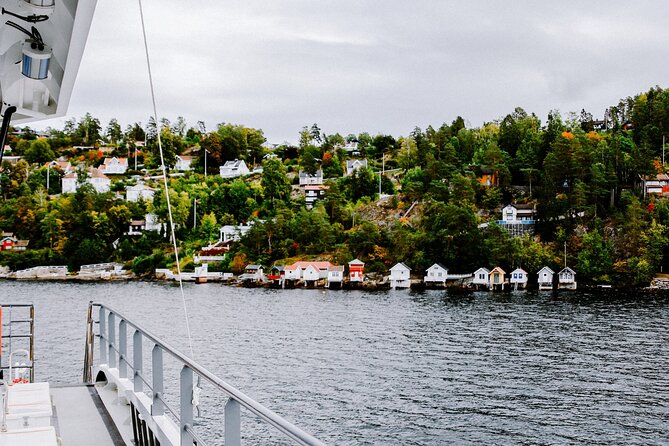
This is not a voyage into the steep, narrow fjords usually associated with western Norway. The Oslofjord is broader and gentler here. You get city shoreline, small islands, inlets, lighthouses, historic buildings, and wooded hills rather than towering cliffs.
That difference matters when you set expectations. If you want a pleasant view of Oslo from the water, this is a good fit. If you expect a dramatic Norway-in-a-tourism-brochure fjord, you may find the scenery less striking.
The fare is about $48.22 per person. I consider that reasonable for a two-hour boat ride with indoor and outdoor seating, restrooms, an audio guide, WiFi, and the option to get off at Bygdøy. It becomes especially useful if you already plan to visit the Fram Museum or another museum on Bygdøy, since the stop can save you a trip back across the city.
More Fjord Tours in Oslo:
- Oslo: Oslo Fjord Sightseeing Cruise by Sailing Ship
★ 4.5 · 5,790 reviews - Oslo: Scenic Fjord Cruise with Audio Guide Commentary
★ 4.5 · 5,375 reviews - Oslo: 100% Electric Oslofjord Sightseeing Cruise
★ 4.4 · 2,041 reviews
Finding City Hall pier 4
The boat departs from City Hall pier 4, also identified as Rådhusbrygge 4, platform E. You need to make your own way there. Hotel pickup and cruise-ship pickup are not provided.
This is the one part I would handle early. The departure area can feel unclear, and the boat or crew may not be immediately visible. Staff generally come to the meeting point around 10 to 15 minutes before departure, but you should not treat the pier as a place with a large ticket office or obvious indoor desk.
Allow time to find the correct pier, particularly if you are arriving from a cruise ship near the Opera House. The Opera House and City Hall are not at the same waterfront point, and one missed turn can become a longer walk than expected. A few people have also found the boat at a nearby pier because of charging or operational arrangements.
Check the exact departure details before you leave your hotel or ship. Once you find the crew, boarding should be straightforward. The maximum group size is 300, so this is a sizable public cruise rather than a small boat outing.
Leaving Oslo behind the City Hall
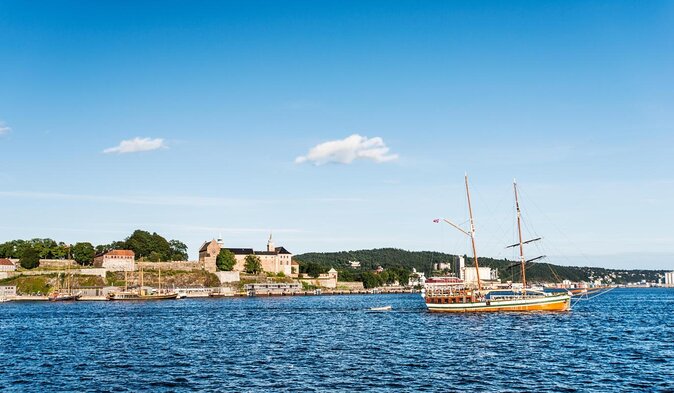
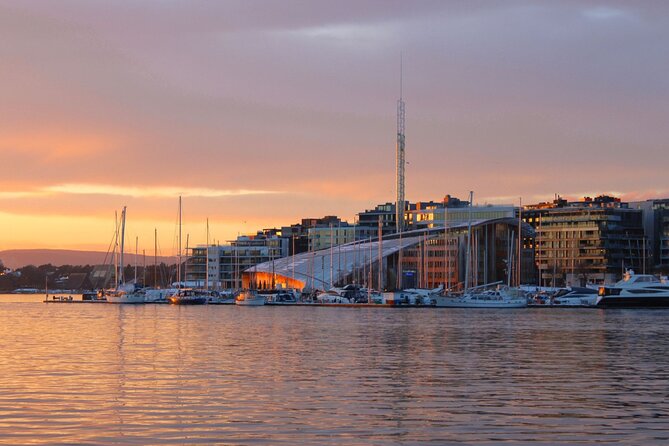
The first part of the trip gives you a strong introduction to Oslo’s waterfront. From City Hall pier 4, the boat moves past the central shoreline, where modern architecture and older fortifications sit close together.
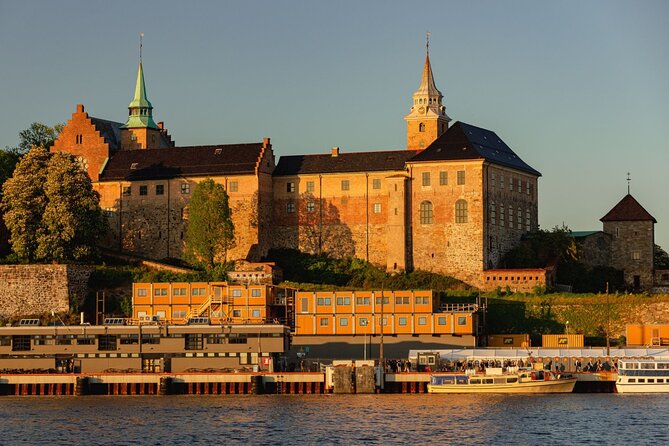
Akershus Fortress is one of the key sights. Its walls and towers occupy a prominent position beside the harbor, and the water gives you an angle that you do not get while walking through central Oslo. The fortress has protected the city and harbor for centuries, making it a useful visual link between Oslo’s past and present.
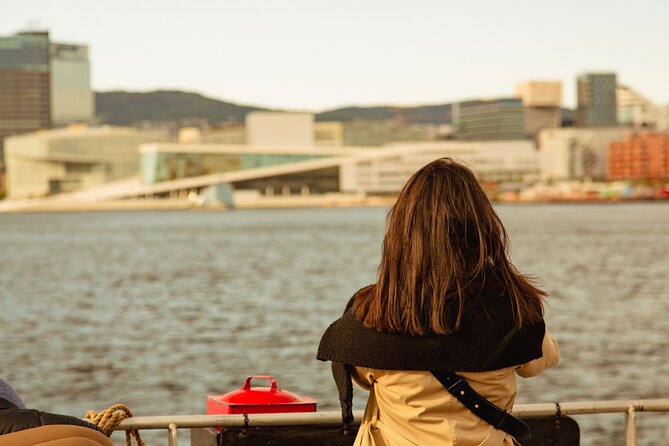
The Opera House appears from another side. Its pale, sloping design reaches toward the water, and seeing it from the fjord helps you understand how closely Oslo’s cultural buildings connect with the harbor. The Munch Museum is another important waterfront marker. The audio commentary should help identify the main buildings, though one passenger found that some attractions were not pointed out clearly enough.
I would keep your camera ready during this opening stretch. The boat moves slowly enough for sightseeing, but the city views change quickly as you leave the pier.
Hoveøya, cannons, and the small islands
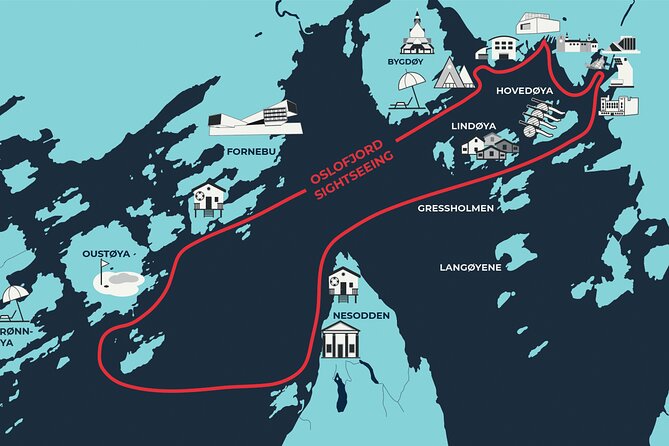
The route continues toward Hoveøya, where old cannons point across the water. This is one of the more memorable details because it shows that the Oslofjord was not only a place for recreation and summer cabins. It was also a defensive approach to the city.
From the boat, the islands feel close enough to study but distant enough to keep their quiet character. You pass smaller islets and narrow inlets, with water and wooded shorelines breaking up the view. The route gives you a sense of how many small pieces make up the inner Oslofjord.
You will also see Dyna Lighthouse, a picturesque marker standing in the water. Heggholmen Lighthouse is another point of interest along the route. The boat passes close enough to these landmarks for good photographs, especially from the outside deck.
The pace is deliberately calm. Some passengers appreciate the chance to sit, listen, and watch the shoreline go by. If you prefer constant action, the slow sections may feel uneventful. I see the quiet pace as part of the appeal, particularly after a busy day of museums and city streets.
Same water, a different way to see it:
- Oslo: Fjord Evening Cruise with Shrimp Buffet
★ 4.5 · 1,956 reviews - Oslo: Guided Sightseeing Fjord Cruise on Premium Silent Boat
★ 4.7 · 1,826 reviews - Guided Sightseeing Cruise on Oslofjord by Premium Silent Boat
★ 5.0 · 730 reviews - 2-Hour Oslo Fjord Sightseeing Cruise by Sailing Ship
★ 4.0 · 694 reviews
Bygdøy and the useful museum stop
One of the best practical features is the ability to get off at Bygdøy. The stop is near the Fram Museum and other maritime museums, making the cruise more than a simple out-and-back ride.
The Fram Museum focuses on the famous polar exploration ship Fram. Nearby museums add more maritime and cultural interest. If these are already on your Oslo plans, getting off here can save time and avoid backtracking.
The information provided for the cruise says you can choose when and how you return. Check the current departure arrangements before leaving the boat, since the practical return options may depend on the day’s schedule. Do not assume that getting off means you can board any later vessel without checking.
Even if you do not visit a museum, Bygdøy gives the cruise a useful endpoint. It breaks up the two-hour outing and lets you combine water views with a land visit. That flexibility is one reason I would choose this cruise over a purely circular harbor ride.
Electric power, smooth water, and onboard comfort
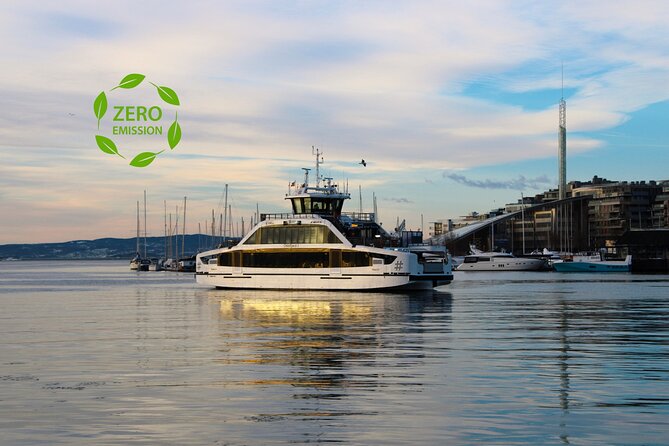
The boat is electric, and that makes the ride notably smooth and quiet. One passenger with motion sickness found the vessel stable and comfortable, with very little wave movement. That is a useful point if you are unsure about spending two hours on the water.
The boat has spacious outside decks that are easy to walk around. These are the best places for unobstructed photographs, especially when the route approaches a lighthouse or passes the Opera House.
The indoor area has panoramic windows and a climate system designed to keep the temperature comfortable. You can sit inside during rain, snow, or wind and still see much of the route. Free blankets are available, which are particularly useful in spring, autumn, and winter.
Still, bring warm clothing. Oslo can be cold, and the wind over the water makes it feel colder than the temperature on land. In January, you should bring a warm jacket and gloves even if you expect to spend most of the cruise indoors.
The vessel has clean restrooms, WiFi, family-friendly amenities, life jackets, and safety instructions. These are practical details rather than headline attractions, but they make a difference during a two-hour ride.
Audio commentary and the sound question
The audio guide adds useful context about Oslo’s buildings, islands, geography, and surrounding countryside. It helps turn a pleasant boat ride into a basic introduction to the city’s setting.
The audio information may be delivered through the onboard system or an app, depending on the current setup. One passenger downloaded the app and found that it played information as the boat approached each landmark. I would check the booking details and any instructions before boarding so you do not miss that option.
Sound quality can vary. Some passengers found the commentary clear and informative, while another said it was sometimes too quiet. Children moving around and making noise can also make it harder to hear. If the narration matters to you, sit inside near the audio system and consider using the app if available.
The content is useful, but it should not replace a full guided tour of Oslo. Think of it as helpful background while you watch the shoreline, not as a detailed lecture.
Snacks, drinks, and what to bring
Snacks and hot or cold drinks are available for purchase onboard. They are not included in the ticket price, so budget a little extra if you want coffee, a soft drink, or something small to eat.
The availability of refreshments is convenient, but do not book the cruise expecting a full meal. Bring your own water if you prefer to avoid buying drinks onboard, though the provided information does not specify outside food and drink rules.
A jacket is more useful than an elaborate picnic. The outside deck can be windy even on a pleasant day, and the indoor seating gives you a comfortable fallback. Blankets are provided free of charge.
The cruise is also a good choice for a final day in Oslo. It requires less walking than a museum-heavy day and gives you a calm look at places you may have passed without noticing from land.
Weather, timing, and the best kind of day
The fjord looks different in every season. In summer, longer daylight and open decks make it easy to watch the islands and shoreline. In winter, snow and pale light can create a memorable setting, but the cold is real.
Rain can reduce the pleasure of the trip. The boat continues to offer indoor views, but wet windows and gray skies make distant landmarks harder to see. The operator may cancel for poor weather, in which case you are offered another date or a full refund.
The two-hour length is well judged for most visitors. It is long enough to reach the islands and lighthouses without consuming an entire day. At the same time, the slower pace can feel repetitive if you are already familiar with Oslo’s waterfront.
I would book this early if your schedule is tight. The experience is often booked around three weeks ahead, and an earlier booking gives you more choices if weather affects the sailing.
Who should choose this cruise?
I would recommend Oslofjord Sightseeing to you if you want:
- A simple introduction to Oslo’s waterfront
- A comfortable boat with indoor and outdoor seating
- A quiet ride with city, island, and lighthouse views
- A practical way to reach Bygdøy
- A short activity for a first or final day in Oslo
- A family-friendly outing with restrooms and room to move
- A smooth boat ride if you are concerned about motion sickness
I would be more cautious if you want towering fjord cliffs, a small personal tour, or a fast-moving itinerary packed with stops. This is a relaxed sightseeing cruise, not an expedition.
The cruise works especially well for first-time visitors, couples, families, and anyone who wants a break from walking. It is also useful for independent visitors who prefer to look around at their own pace rather than follow a guide through every minute of the trip.
Should you book Oslofjord Sightseeing?
I think you should book it if you see the Oslofjord as part of the city itself, not just a route to somewhere else. The strongest parts are the smooth electric boat, clear city views, comfortable seating, and Bygdøy stop. The price is fair for two hours, especially when the cruise fits neatly with a museum visit.
Go with realistic expectations. You are getting a calm coastal tour with Oslo landmarks, islands, lighthouses, and useful commentary. You are not getting the dramatic cliffs of western Norway.
Arrive early at City Hall pier 4, dress warmly, and check how the Bygdøy return works. With those details handled, this is an easy and pleasant way to see Oslo from a different angle.
FAQ
Where does the Oslofjord sightseeing cruise depart?
It departs from Rådhusbrygge, also called City Hall pier 4, platform E, in Oslo.
How long is the cruise?
The cruise lasts approximately two hours.
Is hotel or cruise-ship pickup included?
No. You must make your own way to City Hall pier 4. Pickup from hotels and cruise ships is not provided.
Is the cruise offered in English?
Yes. The experience is offered in English and includes audio commentary.
Can I get off at Bygdøy?
Yes. The cruise includes a stop at Bygdøy, near the Fram Museum and maritime museums. You can choose when and how you return, but check the current arrangements before leaving the boat.
Are snacks and drinks included?
No. Snacks and hot or cold drinks are available to purchase onboard.
Is the boat heated?
Yes. The boat has indoor seating with a climate system and panoramic windows. Blankets are also available for comfort.
What happens if bad weather cancels the cruise?
If poor weather causes a cancellation, you are offered a different date or a full refund. Free cancellation is also available when you cancel at least 24 hours before the start time.
Just added around Oslo
- Fjord Houseboat Cruise in Oslo. 100 % electric. BYO★ 5.0 · 3 reviews
- 4 hours Best View of the Oslofjord Winter Edition★ 4.0 · 15 reviews
- The Scenic Roadtrip, Oslo to Bergen via Flam & the Fjords★ 5.0 · 25 reviews
- Panoramic Peaks and Oslo’s Best Fjord Views Hike★ 3.0 · 2 reviews
- Private Oslofjord Island Hopping Tour★ 4.5 · 8 reviews
- Oslofjord Island Hopping Tour★ 4.5 · 28 reviews
- Private tour, Bergen to Oslo – Nærøyfjord Cruise & Flåm Railway★ 5.0 · 6 reviews
- Oslo’s Ultimate Fjord View Hike & Norwegian Waffle Workshop★ 5.0 · 4 reviews
Oslo Fjord Tours, compared.
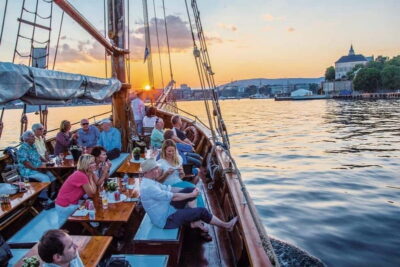
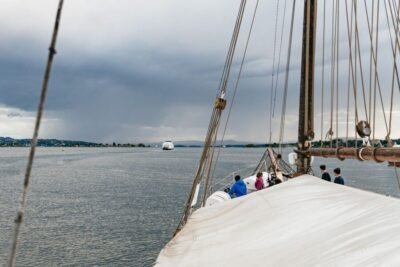
Oslo Fjord Sightseeing Cruise by Sailing Ship
Read our review →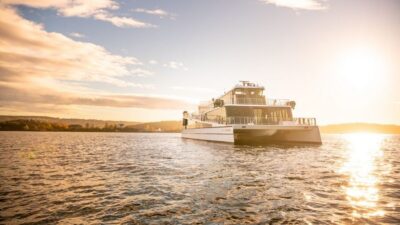
Scenic Fjord Cruise with Audio Guide Commentary
Read our review →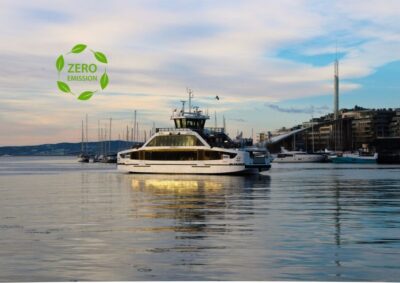
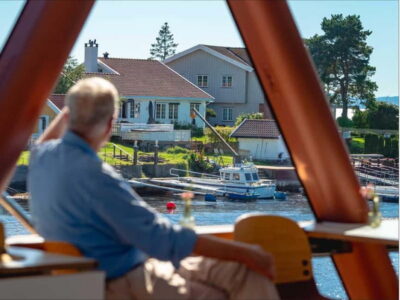
Guided Sightseeing Fjord Cruise on Premium Silent Boat
Read our review →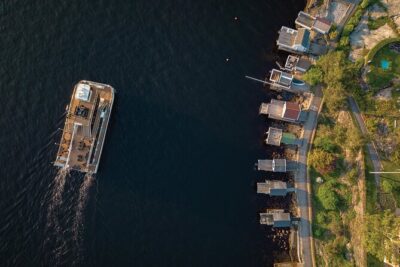
Guided Sightseeing Cruise on Oslofjord by Premium Silent Boat
Read our review →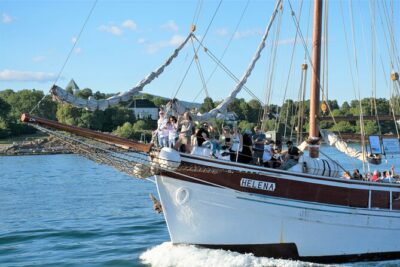
2-Hour Oslo Fjord Sightseeing Cruise by Sailing Ship
Read our review →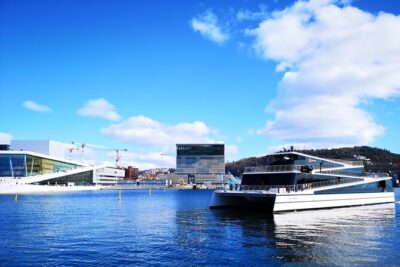
Oslo Combo Tour: Grand City Tour and Oslo Fjord Cruise
Read our review →Browse the lists this tour appears in