
Review · ANDALSNES
Geiranger: Sky to Fjord Downhill Biking Adventure
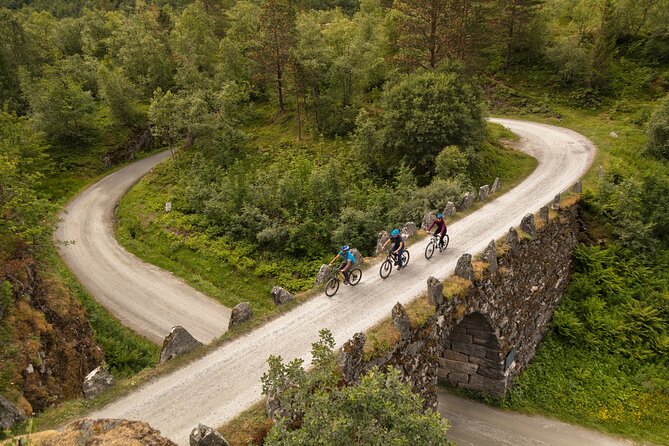
The best way down is on two wheels. This Geiranger cycling adventure begins high above the fjord at Djupvatn Lake, then sends you 16 kilometers downhill past waterfalls, valleys, and famous viewpoints. I like the freedom to stop for photos whenever you wish, and I like that the small group size is limited to six people.
The main drawback is easy to miss: this is an unguided ride on a public mountain road. There is no bike path or shoulder in parts, and large buses may share the road. Equipment reports are also mixed, so you should inspect your bike and helmet before setting off.
Key details before you book
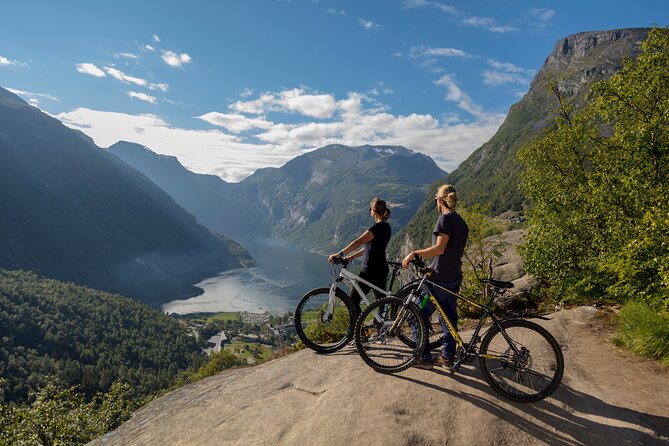
- Start at 1,030 meters: A vehicle carries you from Geiranger up to Djupvatn Lake, so your ride is mainly downhill.
- Ride 16 kilometers: Most of the route is an easy coast, with one short uphill section that some people choose to walk.
- Stop at classic viewpoints: Expect views near Blåfjell, Kvandals waterfall, Opplenskedalen Valley, Knuten, and Flydalsjuvet.
- Ride without a guide: You set your pace and choose when to stop, but you must manage the road, traffic, and route yourself.
- Small group, basic gear included: The experience is limited to six people and includes a bike, helmet, gloves, and visibility vest.
- Weather matters: Poor weather can lead to a rescheduled trip or full refund, and free cancellation is available up to 24 hours ahead.
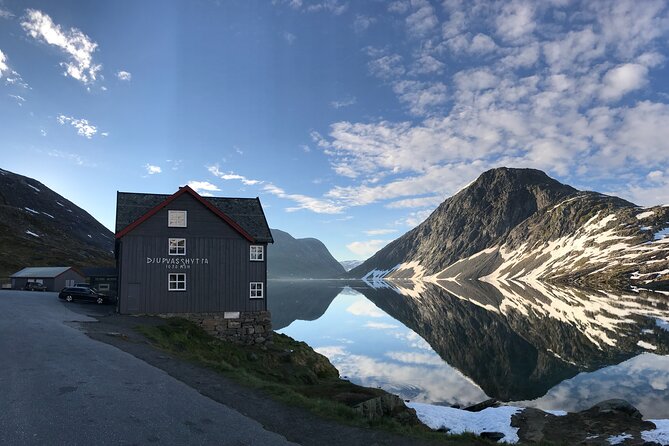
From Geiranger to Djupvatn Lake at 1,030 meters
You meet at Geirangervegen 10 in Geiranger, then ride in an air-conditioned vehicle up to Djupvatn Lake. That transfer is an important part of the experience. It saves your legs for the descent and gives you a chance to settle in before handling the bike.
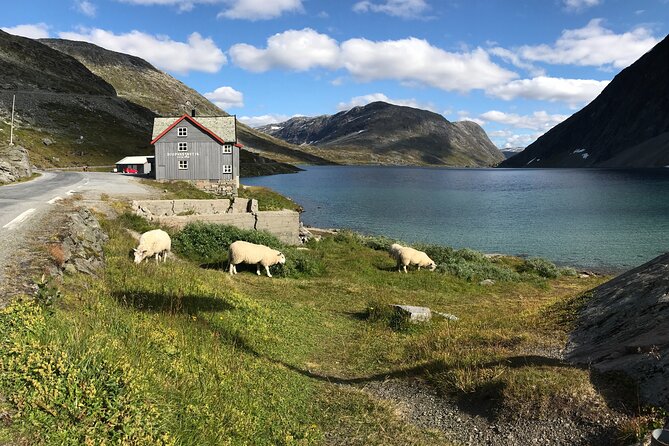
The lake sits at about 1,030 meters above sea level. From here, the road drops toward Geiranger through some of the finest mountain scenery in the area. You are not pedaling a long touring route. You are using gravity, brakes, and careful steering to cover about 16 kilometers.
Before you leave, the staff provide the bicycle, helmet, gloves, and visibility vest. You also receive technical and safety instructions, along with suggestions for enjoying the descent. Since there is no guide riding beside you, pay close attention at this point. Ask where to go, how the brakes feel, and what to do if you have a problem.
The group size is capped at six. That gives the start a more personal feel than a large bus excursion, but it also means the ride depends on everyone being ready at roughly the same time. The total experience lasts about two and a half hours, including the drive up and the ride down.
More Cycling Trips in Norway:
- Geiranger Fjord: Downhill Self-Guided Bike Tour
★ 4.5 · 30 reviews - Olden: Fjord e-bike tour
★ 5.0 · 23 reviews - Fjord Sightseeing on Kvaløya With E-Bike
★ 3.0 · 2 reviews
A downhill ride, not a guided bike tour
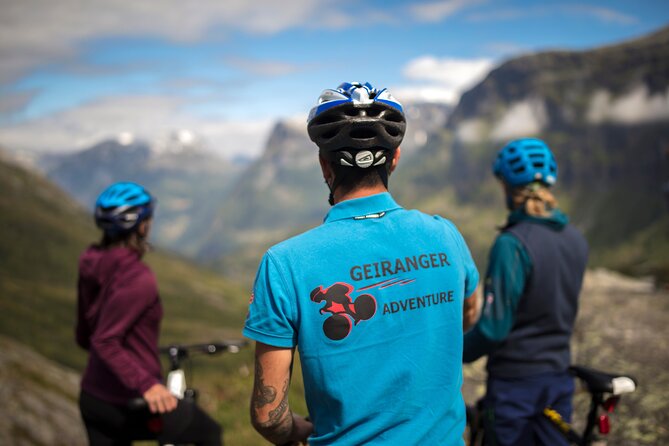
This distinction affects the value. You are not following a guide who stops to explain every bend or keeps the group together. After the equipment handoff, you ride independently down the mountain road.
I see that as both the strength and weakness of the experience. If you like to pause for photographs, take your time, and avoid being hurried from one viewpoint to the next, the freedom is excellent. You can set your own pace and enjoy the scenery without trying to keep up with a guide.
The trade-off is that you must be comfortable making your own decisions. You need to watch the road, judge your speed, use the brakes early, and stay alert for traffic. One important detail is not obvious from the cheerful downhill concept: some sections have no shoulder or separate bike lane. Large buses and other vehicles may pass close by.
That road setting led one party to decide not to ride after seeing the conditions. The driver, Marcell, was described as gracious and stopped for photographs on the way down. If riding beside motor traffic makes you uneasy, speak up before starting. The vehicle transfer and photo stops may still give you a pleasant mountain outing, but the cycling portion is best for someone who accepts ordinary road conditions.
What the equipment means for your ride
The package includes a bike, helmet, bicycle gloves, and visibility vest. That is useful, especially if you are packing for a cruise and do not want to bring your own equipment. Several people found the bikes easy to manage, and one rider in their late sixties said the route was comfortable to handle.
Still, equipment quality deserves a careful check. Most comments describe good bikes and helpful staff, but one detailed account reported a poorly fitted bike, worn tires, sticky brakes, a loose kickstand, difficult helmet straps, and a badly damaged visibility vest. That is a serious concern on a steep public road.
You should not simply accept the first bike and roll away. Check that:
- The seat height feels right.
- The brakes engage smoothly and firmly.
- The helmet fits securely.
- The tires look properly inflated and have usable tread.
- The kickstand is folded up and stays out of the way.
- You know how to contact the office if you have trouble.
The company provides a phone number through booking information, but phone service may not be available at the mountain. Save the contact details before you leave Geiranger. It is a small step that could prevent a large headache.
Blåfjell and Kvandals waterfall
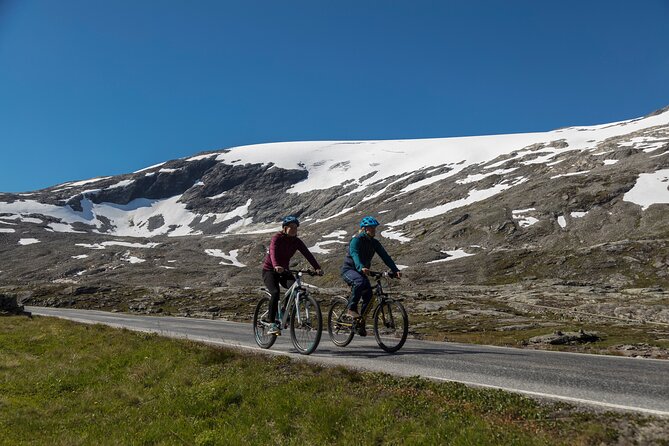
The first section gives you the thrill of dropping from the high mountain road toward lower valleys. Near the foot of Blåfjell, you can stop for wide views of the surrounding peaks and road below.
This is where the ride starts to feel less like transportation and more like a scenic outing. The road gives you changing angles as you descend, and the height makes the fjord country feel vast. You should still keep your stops well off the traffic lane. There may be no proper shoulder, so pull over only where the road allows it.
Kvandals waterfall provides another natural pause. Waterfalls are especially rewarding on a downhill ride because you can stop without having to grind uphill afterward. Bring your camera somewhere easy to reach, but do not let photography distract you from the road or from securing the bike.
The route is not a technical mountain-bike course. It is a road descent, and the challenge comes from controlling speed and sharing space with vehicles rather than from rough trails or jumps. That makes it suitable for a reasonably active person who can ride a bicycle confidently, but not necessarily for someone looking for a guided adventure-sports course.
Same water, a different way to see it:
- From Bergen: The Original Fjord Cruise to Mostraumen
★ 4.7 · 8,440 reviews - Stavanger: Electric Fjord Cruise to Lysefjord & Preikestolen
★ 4.6 · 8,385 reviews - Oslo: Oslo Fjord Sightseeing Cruise by Sailing Ship
★ 4.5 · 5,790 reviews - Oslo: Scenic Fjord Cruise with Audio Guide Commentary
★ 4.5 · 5,375 reviews
Opplenskedalen Valley and the short uphill section
The road continues through Opplenskedalen Valley, where the scenery becomes more open and pastoral. You may see flowers, small settlements, waterfalls, and the fjord country unfolding below. The exact feel depends heavily on the weather. On a clear day, the views can reach far across the mountains and water. In poor weather, clouds may hide much of the scenery.
Despite the downhill name, the route is not a perfectly continuous descent. There is a small section where you need to pedal uphill. Several riders found it manageable, while others simply walked the bike for that short stretch. That is worth knowing if you are worried about fitness. You do not need strong cycling legs for the whole route, but you should be able to handle a brief effort or walk beside the bike.
The road can also be steep in places. Your hands may spend more time on the brakes than your legs spend pedaling. Use controlled braking instead of gripping the brakes constantly, and leave enough space between you and anyone riding ahead.
Because the ride is unguided, you can pause in the valley for pictures or take your time before continuing. That flexibility is one of the best reasons to choose this outing over a fixed sightseeing drive.
Knuten and the road toward Flydalsjuvet
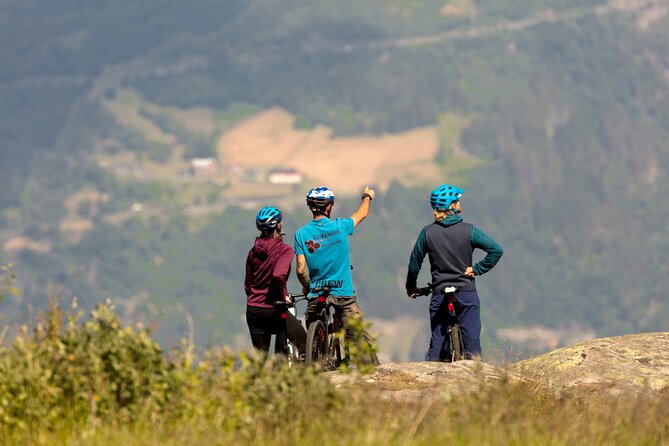
Knuten is another scenic point along the descent. The route gives you repeated chances to stop rather than placing all the sightseeing into one rushed visit. You are moving through the scenery at bicycle speed, which makes the road, waterfalls, valleys, and fjord feel more connected.
The final major highlight is Flydalsjuvet. This is the famous viewpoint associated with Geiranger, known for its dramatic view over the fjord and steep surrounding mountains. It is the place most likely to produce the trip’s best photograph, so allow time for a proper stop rather than treating it as a quick roadside glance.
The viewpoint also helps explain why this route is popular. You are not merely renting a bicycle and riding around town. You begin above the fjord, pass through changing mountain scenery, and finish near one of Geiranger’s signature viewpoints. The ride has a clear visual story from high lake to fjord village.
At the same time, Flydalsjuvet is not a private cycling stop. Roads and viewpoints can be busy, and you need to secure the bike and watch traffic. Your freedom to stop does not remove the need for caution.
Why the unguided format can be a good thing
I like the lack of a guide more than I expected to. A guided ride can be useful, but it can also make you rush past the exact view you wanted to photograph. Here, you can stop often, wait for a break in traffic, and ride at a pace that suits you.
That format worked well for people with different riding abilities. A strong cyclist can move ahead, while a less confident rider can take the descent slowly. One couple found the road much easier than expected, even though one person was not an experienced cyclist.
You can also make the outing your own. One rider left the bicycle near the start of a walk to Storsaeterfossen Waterfall, completed the hike, then returned to continue toward Geiranger. That option is not presented as a formal part of the tour, so do not assume every extra stop is arranged or supported. Still, it shows how the self-guided format can give you room to add your own plans.
The weakness is that there is no guide to point out sights, manage road crossings, or help with a mechanical problem. If you want local storytelling and close supervision, this is the wrong choice. If you want independence and photo time, it is a strong match.
Is $160.09 fair for two and a half hours?
At $160.09 per person, this is not a cheap bicycle rental. The price covers the vehicle transfer to 1,030 meters, the bike and safety gear, staff assistance at the start, and access to a memorable downhill route.
The value depends on what you compare it with. For a cruise shore excursion, the trip gives you a compact way to reach mountain scenery that would take much more effort by bicycle from sea level. The air-conditioned transfer is also useful in changing Norwegian weather and keeps the total outing short enough to fit into a port day.
Still, you are paying for an independent ride rather than a fully guided tour. You may feel the cost is high if you measure it only by time on the bicycle. The price will make more sense if you value the transfer, the small group, the included equipment, and the chance to stop freely at places such as Flydalsjuvet.
The booking record commonly reaches far ahead, with an average lead time of about 74 days. If this is a priority for your Geiranger stop, reserve early. The group limit of six can fill faster than a large bus excursion.
Who should book this Geiranger bike ride?
I would recommend it to a confident recreational cyclist who enjoys scenery more than speed. You should be able to control a bicycle downhill, use hand brakes comfortably, and share a public road with buses and other vehicles.
It is also a good fit if you want:
- A short, active shore excursion.
- Plenty of time for photographs.
- A small group rather than a large coach outing.
- A mostly downhill route with only one brief uphill section.
- A self-paced experience without a guide riding beside you.
I would hesitate if you are nervous around traffic, need a separate bike path, or expect a technically supervised cycling tour. I would also be cautious if you cannot inspect or adjust a bicycle before riding. The scenery is superb, but beautiful views do not make road safety less important.
The tour operates in English. Confirmation arrives at booking, and public transportation is nearby. You need a moderate level of fitness, though the downhill design makes this less demanding than a conventional mountain ride.
Weather is a real factor. If conditions are poor, the experience may be canceled and you will be offered another date or a full refund. You can also cancel for a full refund up to 24 hours before the start time. Changes or cancellations inside that window are not accepted.
Should you book it?
Book this ride if you want the most freedom and the least uphill work possible, and if you are comfortable riding on a public mountain road. The scenery, especially around Djupvatn, the waterfalls, Opplenskedalen, Knuten, and Flydalsjuvet, gives the outing real value.
Before you commit, decide how you feel about the two key trade-offs: unguided riding and mixed equipment reports. Ask for a properly fitted bike, test the brakes, confirm the route, and save the contact number before leaving service range.
For a confident cyclist with clear weather, this can be one of the most memorable ways to see Geiranger. For someone seeking a fully guided and traffic-free ride, choose a different excursion.
FAQ
Where does the cycling adventure start?
You meet at Geirangervegen 10, 6216 Geiranger, Norway. The activity also ends back at this meeting point.
How long does the experience last?
The complete experience lasts approximately two hours and 30 minutes.
How far do you ride?
You ride about 16 kilometers downhill from Djupvatn Lake toward Geiranger.
How high is the starting point?
The vehicle takes you to Djupvatn Lake, which is about 1,030 meters above sea level.
Is the ride guided?
No. The downhill ride takes place without a guide. Staff provide equipment, technical instructions, safety instructions, and tips before you start.
What equipment is included?
A bicycle, helmet, bicycle gloves, and visibility vest are included. Transport in an air-conditioned vehicle is also included.
What happens if the weather is poor?
The experience requires good weather. If it is canceled because of poor conditions, you will be offered a different date or a full refund. You can also cancel up to 24 hours before the start time for a full refund.
Just added around Norway
- Winter Tour Viking Village, Nærøyfjord Cruise & Flåm Railway★ 4.6 · 26 reviews
- Tromso: Visit 5 Fjords in 4 hours★ 4.2 · 23 reviews
- Grøtfjord, Tromsø. Unique Artic scenic route.★ 5.0 · 2 reviews
- Tromsø: Fjords, Mountains and City Highlights Day Tour★ 4.4 · 11 reviews
- Tromsø: Summer Fjord Road Trip with Citizen Science★ 4.8 · 29 reviews
- Tromsø: Fjords, Kvaløya & Sommarøy Accessible Tour w/ Lunch★ 4.9 · 27 reviews
- Tromsø: Fjord Tour and Visit to Sommarøy with Expert Tour Guide in Italian★ 4.5 · 2 reviews
- Tromsø: Fjords & Sommarøy Tour with Warm Local Lunch Option★ 5.0 · 7 reviews
Andalsnes Fjord Tours, compared.
Guided kayak tour “The Seven Sister Tour” on the Geiranger Fjord – 4 h
Read our review →
Geiranger Fjord Tour (Geiranger-Hellesylt one way)
Read our review →
Browse the lists this tour appears in